
 View All
Florida Slip and Fall Law: What Is “Actual or Constructive Knowledge”?

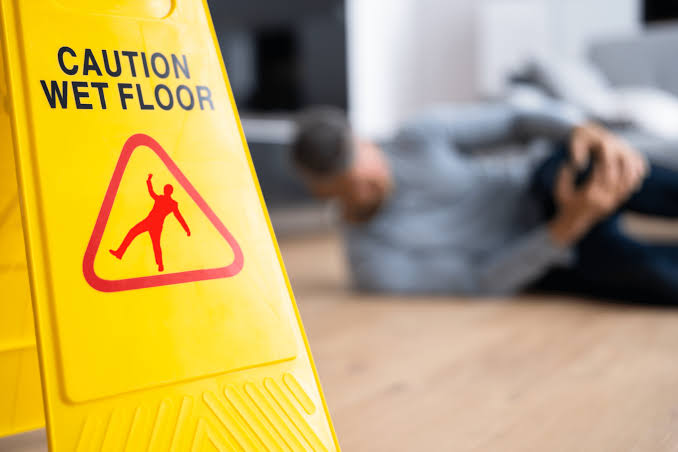
You slip on liquid in a Florida store and suffer an injury.
The floor was clearly unsafe. But no one can tell you exactly when the spill appeared or whether an employee saw it before you fell.
Does that mean the business cannot be responsible?
Not necessarily.
For many Florida slip-and-fall claims involving temporary substances in businesses, proving that a dangerous condition existed is only part of the case. Florida law may also require evidence that the business actually knew about the condition or should reasonably have known about it before the fall.
Those two concepts are known as actual knowledge and constructive knowledge.
Understanding the difference can explain why evidence such as surveillance footage, footprints, inspection records, and recurring complaints can become so important.
Why Does “Knowledge” Matter in a Florida Slip and Fall Claim?
Florida does not automatically hold a business responsible simply because a customer slipped on something inside the store.
Florida Statute §768.0755 says that when a person slips and falls on a transitory foreign substance in a business establishment, the injured person must prove that the business had actual or constructive knowledge of the dangerous condition and should have taken action to remedy it.
A puddle, spilled drink, piece of food, or similar temporary hazard can therefore raise two separate questions:
Did the business actually know it was there?
Or, if nobody admits knowing about it:
Should the business reasonably have discovered it?
For a broader explanation of the other elements of liability, see our guide on How Do You Prove a Slip and Fall Claim in Florida?
When Does Florida’s Actual or Constructive Knowledge Rule Apply?
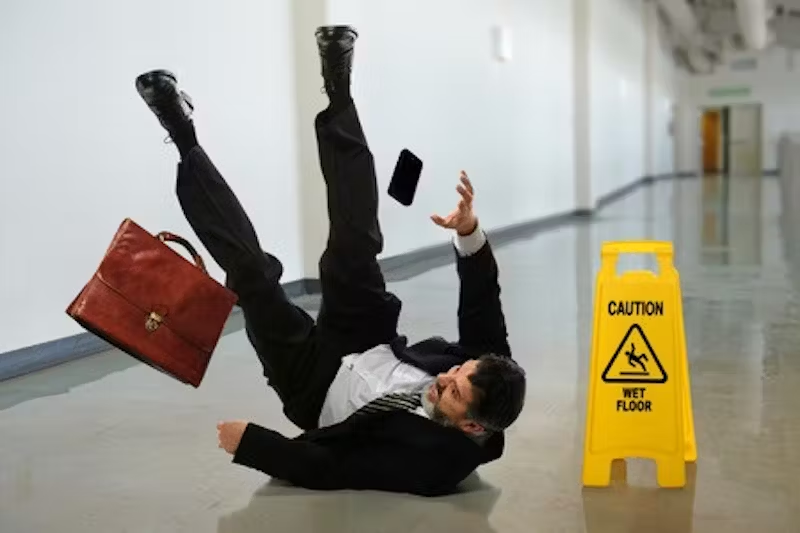
Section 768.0755 specifically addresses transitory foreign substances in business establishments.
That can include temporary conditions such as:
- Water on a supermarket floor
- A spilled beverage
- Food dropped in an aisle
- Oil or grease
- Other temporary substances creating a slippery surface
Not every premises-liability case fits that exact category.
A broken staircase, defective flooring, damaged handrail, or another more permanent property defect may involve different premises-liability principles.
That distinction matters because the actual-or-constructive-knowledge requirement under §768.0755 should not simply be copied onto every type of Florida property-injury case.
What Is Actual Knowledge in a Florida Slip and Fall Case?
Actual knowledge means the business or one of its employees actually knew about—or created—the specific dangerous condition before the accident.
Evidence supporting actual knowledge might show that:
- An employee saw the spill
- A customer reported the condition
- A manager received a complaint
- An employee had already begun cleaning the area
- An internal record documented the hazard
- An employee or business operation created the condition
The word specific matters.
A business knowing that spills can happen in a grocery store is not the same as knowing there is a particular puddle in a particular aisle.
In Kincaid v. Walmart, decided in March 2026, Florida’s Fourth District Court of Appeal affirmed judgment for Walmart where the evidence did not show employees had actual or constructive knowledge of a ruptured gel pack and slippery substance before the incident. The case illustrates that general awareness of a possible type of hazard is not necessarily proof that the business knew about the specific condition that caused the accident.
Does an Employee Being Near the Hazard Prove Actual Knowledge?
No—not automatically.
An employee may be physically close to a spill without actually seeing it.
That happened in Publix v. Safonte. A Publix employee was only a few feet from a yogurt spill, but his back was turned. The container made only a faint sound, and the fall happened about two minutes later. The Fourth District concluded that the evidence was insufficient to establish Publix’s knowledge under the circumstances.
That does not mean employee proximity is irrelevant.
It can become meaningful when combined with other facts, such as whether the employee walked directly past the hazard, was facing it, had been told about it, or had responsibility for monitoring that area.
When actual knowledge cannot be shown, the next issue is often constructive knowledge.
What Is Constructive Knowledge in a Florida Slip and Fall Case?
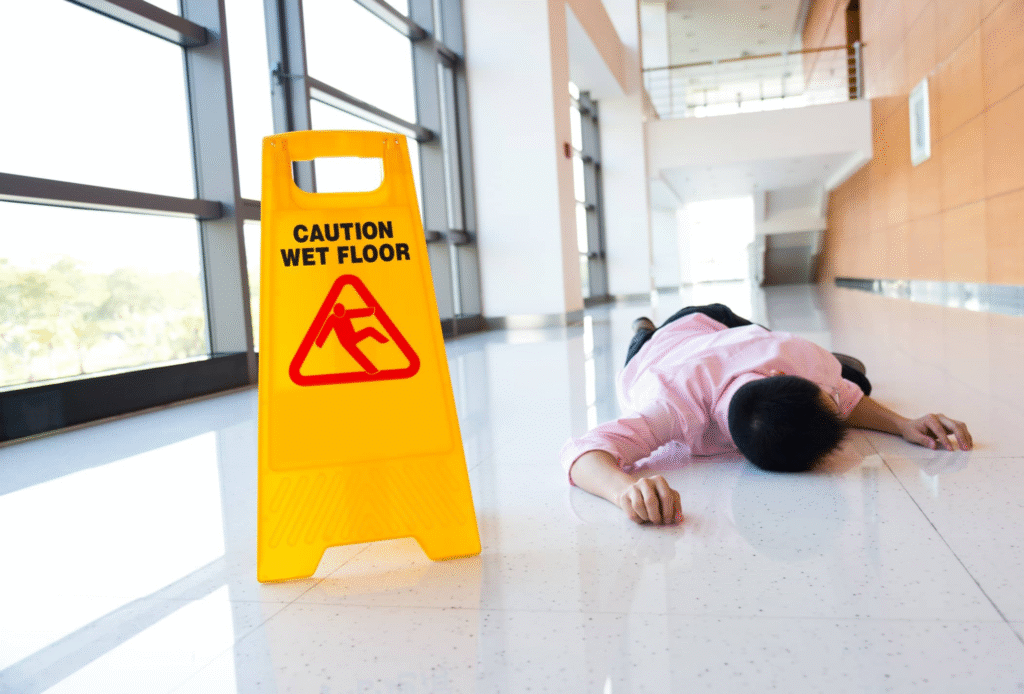
Constructive knowledge is about what the business should have known, even if no employee admits actually seeing the hazard.
Florida law allows constructive knowledge to be proven in two ways.
The Hazard Existed Long Enough to Be Discovered
The first route involves duration.
If a dangerous condition remained on the floor long enough that a reasonably careful business should have discovered it, that can support constructive knowledge.
The question is not simply whether the spill existed.
It is whether the surrounding facts support the conclusion that it existed long enough for reasonable inspection or attention to reveal it.
The Hazard Happened Regularly Enough to Be Foreseeable
The second route involves regularity.
Constructive knowledge can also be supported if the same type of dangerous condition occurred often enough that the business should reasonably have anticipated it.
A recurring leak is a good example.
If water repeatedly accumulates in the same area and the business knows or should know about the recurring problem, that can be very different from a completely unexpected one-time spill.
How Can You Prove Constructive Knowledge Without Knowing Exactly When the Spill Happened?
Most customers do not know when a spill first reached the floor.
Florida law does not always require direct evidence of the exact minute it appeared.
Circumstantial evidence can help establish duration.
Physical Signs on the Substance
The condition itself may contain clues.
Evidence can include:
- Footprints through the liquid
- Shopping-cart tracks
- Scuff marks
- Partial drying
- Dirt or disturbance
- Changes in the substance’s consistency
The important point is not that any one of these details automatically proves constructive knowledge.
Rather, those facts may help support an inference that the condition existed before the accident for some period of time.
A dirty-looking puddle alone may not tell the whole story. A liquid could already have been dirty when it was spilled. Additional signs—such as multiple footprints or tracks—can provide more context.
Surveillance Footage
Video can sometimes provide the clearest timeline.
It may show when a hazard appeared, how long it remained, which employees or customers passed nearby, and what happened immediately before the fall.
In Ouedraogo v. Walmart, decided in February 2026, surveillance showed a banana peel on the floor for almost eight minutes. Several Walmart employees were nearby, and one walked directly past it. The First District held that the evidence was enough to create a factual dispute over constructive knowledge.
Surveillance footage can therefore matter even when nobody can testify to the exact timing from memory.
Inspection and Cleaning Records
Inspection logs can help answer another important question:
When was the area last checked?
Records may show:
- When the floor was inspected
- Whether employees performed routine checks
- Whether maintenance had been requested
- Whether a meaningful inspection gap existed before the fall
These records do not prove constructive knowledge automatically, but they can help build—or challenge—the timeline.
Can a Recurring Hazard Establish Constructive Knowledge?
Yes, potentially.
Florida law expressly allows constructive knowledge to be shown when a dangerous condition occurred with enough regularity to become foreseeable.
Evidence might include:
- Repeated leaks
- Similar water accumulation in the same area
- Prior complaints about the same problem
- Maintenance requests
- Previous sufficiently similar incidents
But a history of unrelated accidents is not necessarily enough.
In Kincaid, the court rejected the argument that various prior store incidents established that ruptured gel packs occurred regularly enough to make the specific hazard foreseeable. Many of the prior incidents involved different causes, such as rainwater or condensation.
The prior problems need to be meaningfully related to the condition at issue.
How Can Cohen Injury Law Help With a Slip and Fall Notice Dispute?
At Cohen Injury Law, we investigate whether a Florida business knew or should have known about the condition that caused a fall.
We review surveillance, incident reports, inspection and maintenance records, witness information, and other evidence relevant to actual or constructive knowledge.
Our firm handles slip and falls, trip and falls, negligent security, car accidents, and other personal injury matters across South Florida. We offer free consultations from our Fort Lauderdale office. Call 954-246-3999 to discuss your case.
Final Thoughts
Actual knowledge and constructive knowledge answer two different questions.
Actual knowledge asks what the business truly knew about the specific dangerous condition.
Constructive knowledge asks what the business reasonably should have known because the condition existed long enough or occurred regularly enough to be foreseeable.
In many Florida slip-and-fall cases, the most important evidence does more than prove a spill existed. It helps establish timing, recurrence, employee awareness, inspections, or other facts connecting the business to the hazard before the fall.
That connection can be the difference between proving an accident happened and proving legally sufficient notice.