
 View All
Florida Motorcycle Accident Laws: What Injured Riders Need to Know

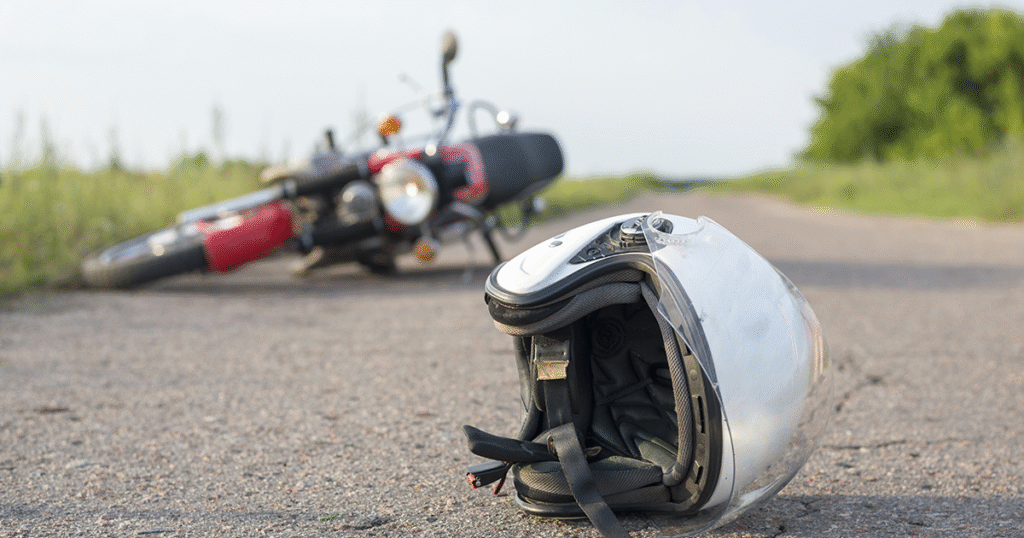
A motorcycle crash in Florida does not follow exactly the same rules as a typical car accident.
One of the biggest differences is insurance. Florida’s ordinary Personal Injury Protection (PIP) system generally does not cover someone injured while riding a motorcycle. Riders also face specific helmet and lane-use laws that can become important when fault and damages are disputed.
If another driver caused your crash, understanding these differences can help you avoid applying the wrong car-accident rules to your motorcycle injury claim.
What Makes a Motorcycle Accident Claim Different in Florida?
Florida treats motorcycles differently from four-wheel vehicles in several important areas.
Most notably, motorcycles fall outside the definition of a “motor vehicle” used by Florida’s no-fault/PIP law because that definition generally covers self-propelled vehicles with four or more wheels.
That affects both insurance benefits and how an injured rider may pursue damages.
Motorcyclists are also subject to specific laws involving helmets, eye protection, lane use, and passing between traffic. If an insurer claims the rider violated one of those rules, the issue may become part of the fault analysis.
The result is that a motorcycle claim should not simply be handled as a car accident with a different vehicle.
Does Florida PIP Insurance Cover Motorcycle Riders?
Generally, no.
Florida’s PIP law defines a covered motor vehicle as a self-propelled vehicle with four or more wheels. A motorcycle does not meet that definition.
The Florida Department of Financial Services also explains that PIP is not available on motorcycles and that PIP coverage on a person’s automobile policy does not cover that person while riding a motorcycle.
That creates an important difference from an ordinary Florida car accident.
A motorcyclist should not be told that the usual 14-day PIP treatment rule controls whether the rider can bring a negligence claim. Prompt medical treatment is still important for health and documentation, but the motorcycle injury claim is not based on obtaining PIP benefits.
Do Motorcycle Riders Have to Prove a Permanent Injury?
Generally, motorcyclists also are not subject to the ordinary PIP permanent-injury threshold in the same way as occupants of covered motor vehicles.
In Scherzer v. Beron, a Florida appellate court held that a motorcyclist excluded from the no-fault system did not have to satisfy the §627.737 injury threshold before maintaining a claim for damages such as pain and suffering.
That is an important distinction from many ordinary Florida automobile cases.
What Insurance May Cover a Florida Motorcycle Accident?
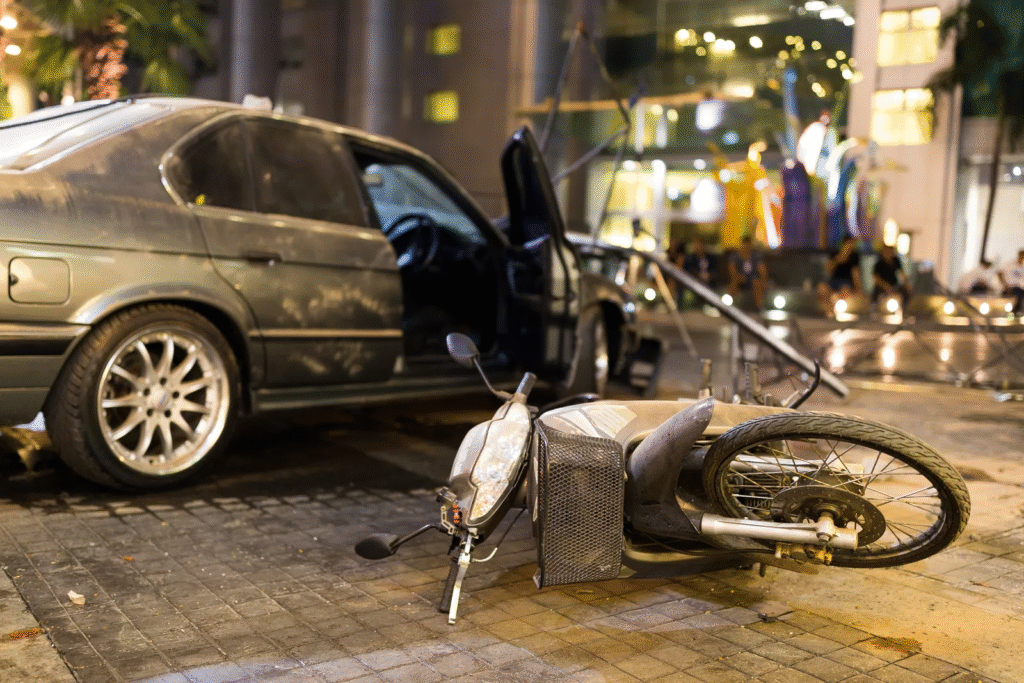
Because PIP generally is unavailable for motorcycle injuries, riders may need to look to other sources of coverage.
Depending on the policies and circumstances, those may include:
- Health insurance
- Optional medical-payments coverage on a motorcycle policy
- The at-fault driver’s bodily-injury liability insurance
- Uninsured or underinsured motorist coverage, if available
- Other liability coverage connected to a responsible party
Florida DFS explains that many types of coverage available on automobile policies can also be purchased through motorcycle insurance, even though PIP itself is not available for motorcycles.
That does not mean an at-fault insurer will immediately pay every medical bill. Liability, insurance coverage, and the amount of damages can all be disputed.
What Does Florida’s Motorcycle Helmet Law Require?
Florida generally requires people operating or riding on motorcycles to wear protective headgear that complies with the applicable federal safety standard.
There is an important exception.
Florida Statute §316.211 allows a person over 21 years old to operate or ride on a motorcycle without the required helmet if that person has an insurance policy providing at least $10,000 in medical benefits for injuries resulting from a motorcycle crash.
So it is inaccurate to say simply that Florida has no motorcycle helmet law.
Florida law also separately requires a person operating a motorcycle to use an approved eye-protection device.
Can Not Wearing a Helmet Affect Your Motorcycle Accident Claim?
Potentially, but not automatically.
Not wearing a helmet does not by itself prove that the rider caused the crash.
The more important question is whether helmet nonuse contributed to the particular injuries for which compensation is being sought.
Florida’s Fourth District Court of Appeal addressed helmet nonuse as a comparative-negligence issue in Lenhart v. Basora. The court explained that the relevant inquiry concerns whether the failure to wear a helmet contributed to the rider’s injuries.
For example, helmet use may be relevant when a rider suffered a serious head or brain injury.
It would generally have much less obvious relevance to an unrelated injury, such as a fractured leg.
That is why “no helmet” should not be treated as an automatic reduction of every motorcycle accident claim.
Is Lane Splitting Legal in Florida?
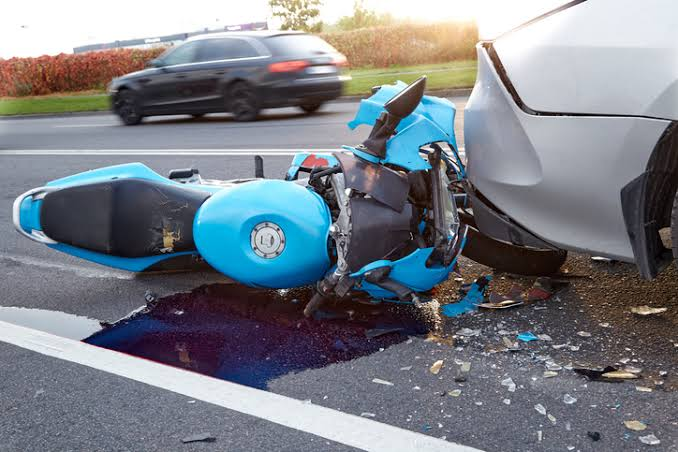
No.
Florida law gives motorcycles the right to full use of a traffic lane, but it also prohibits a motorcycle operator from overtaking and passing another vehicle within the same lane.
The statute also prohibits operating a motorcycle:
- Between lanes of traffic
- Between adjacent lines or rows of vehicles
Motorcycles generally may ride no more than two abreast within one lane.
So what is commonly called lane splitting is prohibited in Florida.
If a rider was lane splitting when a crash occurred, an insurer may argue that the conduct contributed to the collision. But the violation does not automatically establish that the rider was completely responsible. The circumstances of the crash still matter.
Who Can Be Liable for a Florida Motorcycle Accident?
Another driver is often the primary responsible party in a motorcycle accident claim.
Common examples include a driver who:
- Turns left across a motorcycle’s path
- Changes lanes without checking a blind spot
- Fails to yield
- Follows too closely
- Drives while distracted
- Speeds or drives recklessly
- Drives while impaired
Depending on what caused the crash, other parties can sometimes be involved as well.
For example, an employer may become relevant when an employee causes a collision while acting within the scope of employment. A defective motorcycle or vehicle part may raise a product-liability issue, while dangerous roadway conditions can create different questions about responsibility.
Liability depends on the specific evidence, not simply the type of vehicle involved.
What If the Motorcycle Rider Was Partly at Fault?
Being partly responsible does not necessarily prevent a rider from recovering compensation.
Florida uses a modified comparative-fault system in covered negligence cases.
Under Florida Statute §768.81, damages are generally reduced according to a claimant’s percentage of fault. But a person who is found greater than 50% responsible for their own harm cannot recover damages in a negligence action covered by the statute.
For example, if total recoverable damages were $100,000 and the rider was found 20% at fault, the amount would generally be reduced by that 20% share.
Insurers may point to conduct such as speeding, unsafe passing, lane splitting, or an improper lane change.
However, a traffic citation or violation does not automatically determine the final percentage of civil fault. The conduct still has to be evaluated in relation to how the crash and injuries occurred.
What Should You Do After a Motorcycle Accident in Florida?
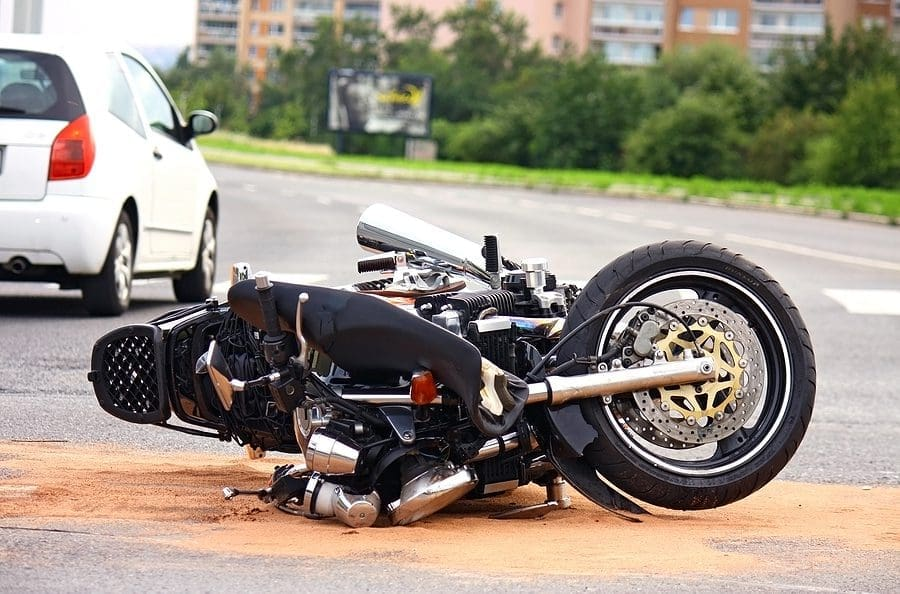
Your health comes first. Get appropriate medical attention, even if you are unsure how serious the injury is immediately after the crash.
For an injury crash, Florida law generally requires prompt notice to the appropriate law-enforcement agency.
When you are physically able, other useful steps can include:
- Photographing the road, vehicles, motorcycle, debris, and visible injuries
- Getting names and contact information from witnesses
- Preserving the damaged motorcycle rather than immediately repairing or disposing of it
- Keeping the helmet and other damaged riding gear
- Saving insurance information and medical records
- Documenting missed work and other financial losses
Be cautious about giving detailed recorded statements before you understand who is requesting them and how the statement may be used.
And while prompt medical attention is important, motorcycle riders should not confuse that advice with the automobile PIP 14-day requirement.
How Can Cohen Injury Law Help After a Florida Motorcycle Accident?
At Cohen Injury Law, we handle motorcycle accident cases involving careless drivers and dangerous roadway conditions. We investigate crashes, preserve evidence, document injuries, identify available insurance, handle insurer communications, and prepare cases for litigation when necessary.
Our founding attorney, Zach Cohen, began his career representing insurance companies in personal injury cases, giving him insight into how insurers evaluate and defend claims. We represent injured clients from our Fort Lauderdale office and offer free consultations. Call 954-246-3999 to discuss your case.
Frequently Asked Questions
Does Florida PIP Cover Injuries While Riding a Motorcycle?
Generally, no. Florida’s PIP definition applies to qualifying vehicles with four or more wheels, and Florida DFS states that automobile PIP does not cover an insured while riding a motorcycle.
Can You Recover Pain and Suffering After a Florida Motorcycle Accident?
Yes, depending on fault and damages. Florida appellate law has held that a motorcyclist outside the no-fault system generally does not have to satisfy the ordinary PIP permanent-injury threshold before pursuing noneconomic damages.
Can Not Wearing a Helmet Reduce a Motorcycle Accident Claim?
It can become a comparative-fault issue if evidence shows helmet nonuse contributed to the injuries being claimed. However, not wearing a helmet does not automatically mean the rider caused the collision or loses the claim.
Is Lane Splitting Legal in Florida?
No. Florida law prohibits motorcycle operators from riding between lanes of traffic or between adjacent rows of vehicles. Motorcycles are nevertheless entitled to full use of their traffic lane.
Final Thoughts
Florida motorcycle accident laws differ from the rules many drivers know from ordinary car crashes.
Motorcyclists generally do not receive PIP benefits while riding, and they are not treated under the ordinary PIP permanent-injury threshold in the same way. Helmet use, lane splitting, and other rider conduct can still affect a claim when they relate to fault or injury causation.
Understanding those distinctions early can help an injured rider identify the right insurance coverage, preserve evidence, and avoid applying rules that were designed for ordinary automobile claims.