

 View All
Can You Sue Someone Other Than Your Employer After a Workplace Accident in Florida?

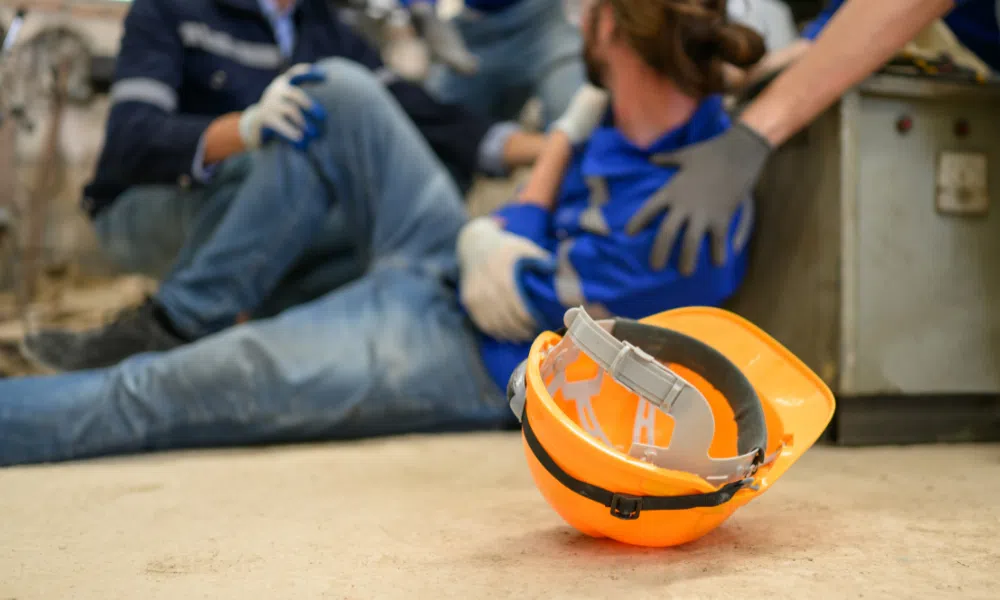
You are injured while doing your job, but your employer did not actually cause the accident.
Maybe another driver hit your work vehicle. A piece of rented equipment failed. Or another company created a dangerous condition at the jobsite.
Can you receive workers’ compensation and also pursue that other person or company?
Potentially, yes.
Florida law allows an injured employee to receive workers’ compensation benefits while also pursuing a legally responsible third party. But there is an important first question:
Is that person or company actually outside Florida’s workers’ compensation immunity rules?
That distinction matters because a different company is not automatically a third party you can sue.
What Is a Third-Party Workplace Injury Claim?
A third-party claim is a separate civil claim against a person or business that may be legally responsible for causing your workplace injury and is not protected from the lawsuit by applicable workers’ compensation immunity.
It is different from a workers’ compensation claim.
Workers’ comp focuses on whether you suffered a qualifying work-related injury and can provide benefits such as medical treatment and disability payments.
A third-party claim asks whether an outside person or company can be held legally responsible under a theory such as negligence, premises liability, or product liability.
Florida Statute §440.39 specifically allows qualifying workers to accept workers’ compensation benefits while also pursuing a third-party tortfeasor.
Why Can’t You Usually Sue Your Employer for Ordinary Negligence?
Florida workers’ compensation generally replaces an ordinary negligence lawsuit against a covered employer.
Under Florida Statute §440.11, an employer’s workers’ compensation liability is generally exclusive and takes the place of other liability to the injured employee for a covered workplace injury.
There are statutory exceptions, including situations where an employer failed to secure required workers’ compensation coverage.
But in most workplace injury cases, the more useful question is not whether you can sue your employer. It is whether someone outside the protected employment relationship also contributed to the accident.
Who Can Be Liable for a Workplace Accident Besides Your Employer?

Several types of outside parties may potentially face a separate claim, depending on how the accident happened.
A Negligent Driver
Suppose you are making a delivery or traveling between worksites when another driver runs a red light and hits your vehicle.
Because you were working, you may potentially qualify for workers’ compensation.
At the same time, the negligent outside driver may face a separate personal injury claim.
Cohen Injury Law’s workers’ compensation page also identifies work-related vehicle crashes as situations where both workers’ comp and a personal injury claim may potentially exist.
A Property Owner or Manager
Employees frequently work at locations their employers do not own.
Delivery drivers, repair technicians, cleaners, maintenance workers, and contractors may be injured by dangerous conditions on property controlled by another business.
A property owner or manager may potentially face a premises-liability claim, depending on issues such as control, negligence, causation, and workers’ compensation immunity.
A Product or Equipment Company
Work injuries can also involve machinery, tools, rented equipment, or defective products.
Depending on the facts, a manufacturer, rental company, repair business, distributor, or another entity may potentially be responsible.
But being connected to the equipment is not enough by itself. There still needs to be a valid legal basis for holding that company responsible.
Another Outside Business
A vendor, maintenance company, or another independent business at the worksite may also qualify as a third party if its negligence caused the injury and it does not have workers’ compensation immunity.
Can You Sue a Contractor or Subcontractor on the Same Jobsite?

This is where Florida law becomes more complicated.
A company does not automatically become a usable third party simply because it is different from your direct employer.
Florida Statute §440.10 can extend workers’ compensation immunity across certain contractor and subcontractor relationships. A qualifying subcontractor working on the same project can receive immunity from negligence suits brought by another subcontractor’s or contractor’s employee when the statutory conditions are met.
Florida law also includes an exception where that subcontractor’s own gross negligence was the major contributing cause of the injury.
The importance of the actual contractual relationships was reinforced in the 2026 case Teed v. Everest Campus East.
There, an injured pool-service employee sued the property manager of an apartment complex after receiving workers’ comp benefits. The Second District Court of Appeal reversed a ruling that had granted the property manager horizontal workers’ compensation immunity because the required contractor/subcontractor relationship had not been established.
The practical takeaway is simple:
Company names and job titles do not decide immunity. Contracts and the actual business relationships can matter.
Can You Receive Workers’ Comp and Pursue a Third-Party Claim at the Same Time?
Yes, in a qualifying case.
Florida §440.39 expressly says an injured employee may accept workers’ compensation benefits and at the same time pursue a remedy against the responsible third-party tortfeasor.
That means you do not necessarily have to choose between:
workers’ compensation
and
a third-party personal injury claim.
The two cases serve different purposes.
Workers’ comp provides statutory benefits connected to the employment injury.
The third-party claim focuses on the outside party’s legal responsibility for causing the accident.
However, the two claims are not financially independent because the workers’ compensation carrier can acquire reimbursement rights against a third-party recovery.
What Do You Have to Prove in a Third-Party Claim?

Receiving workers’ compensation does not automatically prove that another person or company was negligent.
A separate civil claim still needs to be established.
In a typical negligence case, that generally means proving:
- The third party owed a legal duty
- The third party breached that duty
- The breach caused or contributed to the injury
- The worker suffered legally compensable damages
For example, receiving workers’ comp after a work-related car crash does not automatically establish that the other driver caused the collision.
Likewise, an equipment-related injury does not automatically make the manufacturer or rental company liable.
What Can a Third-Party Claim Cover That Workers’ Comp May Not?
Workers’ compensation provides specific statutory benefits, including qualifying medical care and disability payments.
A successful third-party personal injury claim may potentially address broader losses that workers’ compensation does not compensate in the same way.
Depending on the case, those may include additional economic damages, loss of earning capacity, and noneconomic damages such as pain and suffering.
That is one reason identifying every potentially responsible party after a serious workplace accident can matter.
Does Workers’ Compensation Get Repaid From a Third-Party Settlement?
Potentially, yes.
When workers’ compensation benefits have been paid and the injured worker later recovers from a responsible third party, Florida §440.39 gives the employer or workers’ compensation carrier statutory subrogation and lien rights.
But it is too simplistic to say:
“Whatever workers’ comp paid must automatically be paid back dollar for dollar.”
Florida law uses a statutory allocation formula that can account for issues including attorney fees, litigation costs, the value of the damages, and the amount actually recovered.
In Liberty Mutual Insurance Co. v. Lee, Florida’s Sixth District Court of Appeal explained in 2025 that the §440.39 lien can involve workers’ compensation benefits already paid as well as future benefits to be paid, subject to the statutory calculation.
So a third-party settlement should be evaluated with the workers’ compensation lien in mind.
How Can Cohen Injury Law Help With a Third-Party Workplace Injury Claim?
At Cohen Injury Law, we can examine both the workers’ compensation claim and whether another person or company contributed to the accident.
That may include reviewing jobsite relationships, contracts, third-party insurance, accident evidence, and workers’ compensation lien issues. Cohen’s workers’ comp practice specifically considers potential claims involving contractors, drivers, and equipment manufacturers.
Our Of Counsel attorney, David Cohen, has decades of experience in workers’ compensation and personal injury law. We serve clients across South Florida from our Fort Lauderdale office and offer free consultations. Call 954-246-3999 to discuss your situation.
Frequently Asked Questions
Can I Get Workers’ Comp and Sue a Third Party at the Same Time?
Yes, potentially. Florida §440.39 allows a qualifying worker to receive workers’ compensation while pursuing a responsible third party. The workers’ comp carrier may later have a lien against part of the recovery.
Can I Sue Another Driver If I Was Hurt While Driving for Work?
Potentially. If you were acting within the course of your employment, workers’ comp may apply, while an unrelated driver who negligently caused the crash may face a separate personal injury claim.
Can I Sue Another Contractor or Subcontractor on a Florida Jobsite?
Not automatically. Florida §440.10 can give qualifying contractors or subcontractors workers’ compensation immunity depending on their contractual relationship, insurance coverage, and other statutory requirements.
Does Workers’ Comp Get Paid Back From My Third-Party Settlement?
The workers’ compensation carrier may have a statutory lien or reimbursement interest. The amount is governed by Florida’s §440.39 framework and is not necessarily a simple dollar-for-dollar repayment of everything previously paid.
Final Thoughts
A workplace accident involving another person or company can create more than one potential claim.
The key questions are:
Was someone outside your direct employer involved?
Is that person or company actually outside Florida’s workers’ compensation immunity rules?
Can their legal responsibility for the accident be proven?
When those requirements are met, Florida law may allow a third-party claim to proceed while the worker also receives workers’ compensation benefits.
But because contractor immunity, business relationships, insurance coverage, and workers’ complaints can all affect the result, identifying a possible third party is only the beginning of the analysis.