
 View All
Who Can Be Liable After a Plane Crash in Florida?

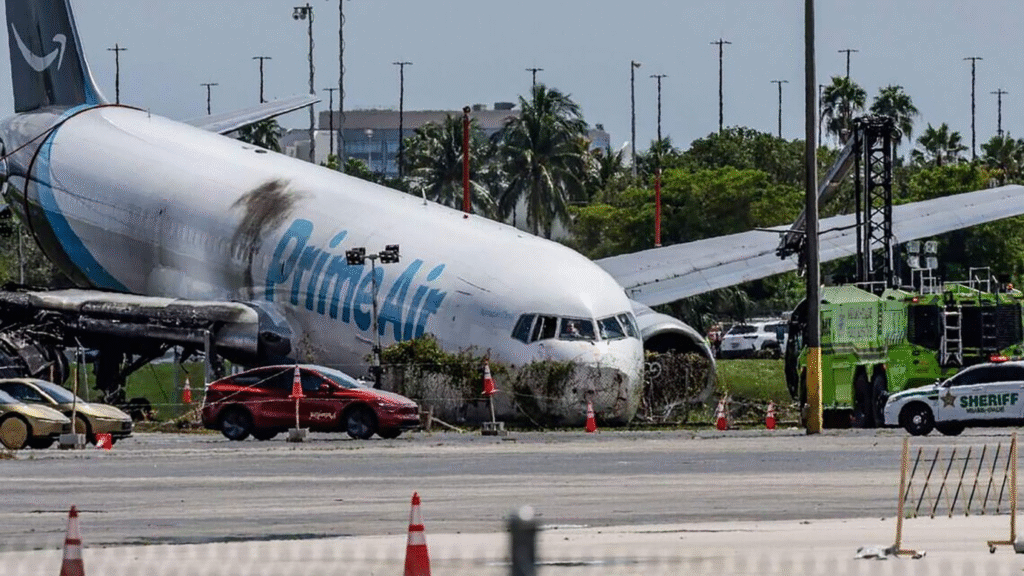
After a plane crash, the pilot may seem like the obvious person to investigate.
But aviation accidents are rarely that simple.
Depending on what caused the crash, responsibility may involve the flight crew, an airline or charter operator, the aircraft owner, a maintenance company, an aircraft manufacturer, an airport service company, or even the federal government.
The applicable law can also change depending on the type of aircraft, whether the flight was domestic or international, and whether the claim involves air traffic control or an older general-aviation aircraft.
That is why the starting question is not simply:
Who was flying the plane?
It is:
What caused the crash, and who had responsibility for that part of the aviation system?
What Is a Plane Crash Injury Claim in Florida?
A plane crash claim is not one single type of lawsuit.
Depending on the facts, it may involve negligence, negligent maintenance, products liability, wrongful death, federal government liability, or international air-carrier law.
For example, a crash caused by a pilot’s poor decision may raise different issues from one caused by an improperly repaired engine or a defective aircraft component.
The location of the crash also does not automatically determine which law applies.
A Florida aviation case may involve:
- Florida tort law
- Federal Aviation Administration regulations
- Federal statutes
- The Federal Tort Claims Act
- The Montreal Convention for qualifying international travel
The correct liability analysis therefore begins with the cause of the accident and the role of each potentially responsible party.
Who Can Be Liable After a Plane Crash in Florida?
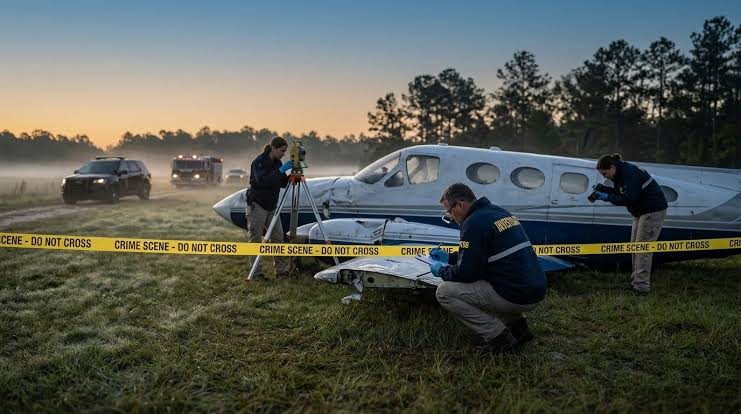
Several parties may need to be investigated after an aircraft accident.
The Pilot or Flight Crew
Federal regulations make the pilot in command directly responsible for and the final authority over operation of the aircraft.
Potential issues may include:
- Flight planning
- Weather decisions
- Fuel management
- Aircraft control
- Checklist use
- Emergency decisions
- Continuing a flight despite unsafe conditions
But regulatory responsibility does not automatically establish civil liability.
The evidence must still show that the pilot’s conduct legally contributed to the crash and resulting injuries.
An Airline or Charter Operator
An airline or charter company can have responsibilities separate from the pilot.
For domestic Part 121 operations, the certificate holder is responsible for operational control, while the pilot and dispatcher share responsibilities involving preflight planning and dispatch.
Airlines are also primarily responsible for aircraft airworthiness even when maintenance is performed by someone else.
Part 135 charter operators likewise remain primarily responsible for their aircraft’s airworthiness and must ensure contracted maintenance complies with applicable requirements.
So a pilot error does not necessarily end the liability investigation.
The Aircraft Owner or Operator
Federal law also places maintenance responsibility on aircraft owners or operators in many private-aircraft situations.
But aircraft ownership alone does not automatically create liability.
Current federal law limits certain claims against an owner, lessor, or secured party when that party did not have actual possession or operational control of the aircraft.
That makes the owner’s actual role important.
A Maintenance Company or Mechanic
Aviation maintenance is heavily regulated.
Federal rules require aircraft maintenance to use prescribed or accepted methods, proper equipment, and workmanship sufficient to return the aircraft or component to the required condition.
A maintenance-related claim may involve:
- Improper repairs
- Missed inspection problems
- Faulty installation
- Engine or flight-control work
- Uncorrected discrepancies
- Improper return-to-service decisions
Aircraft logbooks and maintenance records can become critical evidence in these cases.
Airport or Ground-Service Companies
Some aviation accidents may involve fueling, runway conditions, ground handling, airport equipment, or work performed by a fixed-base operator or another ground-service company.
Liability depends on what actually caused the accident and what role that company played.
Can an Aircraft or Component Manufacturer Be Liable?
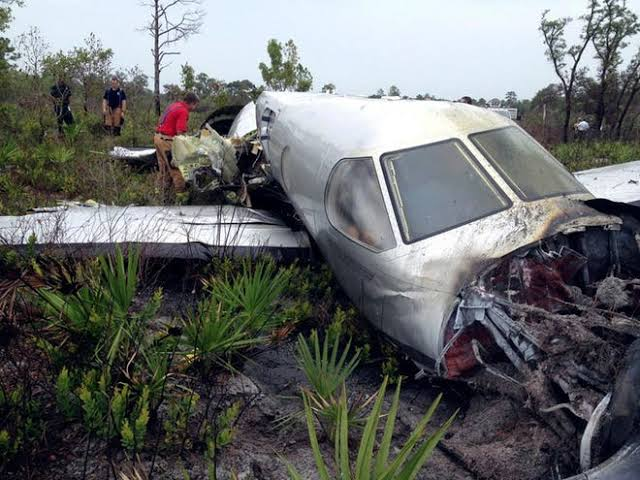
Potentially.
A product claim may involve an aircraft, engine, propeller, flight-control system, seat, fuel system, or another component.
But aircraft manufacturer claims have a major federal limitation.
The General Aviation Revitalization Act of 1994, commonly called GARA, generally establishes an 18-year statute of repose for many manufacturer claims involving qualifying general-aviation aircraft and components. General-aviation aircraft under the statute generally have fewer than 20 passenger seats and are not engaged in scheduled passenger-carrying operations.
The rule is not always based only on the age of the airplane.
If a new component is installed and that specific component is alleged to have caused the crash, its own 18-year period can run from installation. GARA also contains statutory exceptions.
Florida courts have applied GARA. In Nowicki v. Cessna Aircraft Co., the Fourth District Court of Appeal upheld dismissal of a manufacturer claim involving an aircraft delivered decades before the crash because the 18-year repose period applied and the asserted exception was not established.
What If Air Traffic Control Contributed to the Crash?
Air traffic control presents a different legal framework because federal controllers are government employees.
Claims alleging negligence by FAA employees generally fall under the Federal Tort Claims Act, or FTCA.
Before a lawsuit can be filed, the claimant generally must first present an administrative tort claim to the FAA. The FAA expressly warns that failing to comply with the administrative process can bar the claim.
Federal law generally requires that claim to be presented in writing within two years after it accrues. If the agency finally denies the claim, a suit generally must be filed within six months after the denial is mailed.
So it is not accurate simply to say:
“You have two years to sue the FAA.”
The administrative step comes first.
What Role Does the NTSB Play After a Plane Crash?
The National Transportation Safety Board investigates aviation accidents for safety purposes.
It may examine:
- Wreckage
- Aircraft systems
- Pilot information
- Weather
- Maintenance history
- Flight data
- Air traffic control
- Witness statements
But the NTSB does not decide civil liability.
The agency specifically states that it does not assign fault or blame and that its investigations are not conducted to determine legal rights or liability.
There is also an important evidence distinction.
Federal regulations say the NTSB’s Board accident report, including its probable-cause determinations, cannot be admitted or used in a civil damages action. But a factual accident report is treated differently, and there is no statutory bar to its admission solely because it is an NTSB factual report.
NTSB investigations commonly take about 12 to 24 months, depending on complexity.
That is why injured people and families should not assume they must wait for the final NTSB report before protecting a civil claim.
What If the Plane Crash Involved an International Flight?
International passenger travel may be governed by the Montreal Convention rather than ordinary Florida negligence rules alone.
The Convention applies to qualifying international carriage and makes a carrier responsible for passenger death or bodily injury caused by an accident occurring onboard the aircraft or during embarking or disembarking.
A current Florida example illustrates why this matters.
In Murphy v. Airway Air Charter, decided by the Eleventh Circuit in January 2026, a passenger was injured when a charter aircraft on a Miami-to-Bahamas round trip lost engine power and ditched in the ocean. The court applied the Montreal Convention to the passenger’s claims.
The Convention uses its own liability framework and also has its own two-year period for bringing an action.
So an international itinerary should be identified early rather than assuming ordinary Florida law controls the entire case.
What Evidence Is Important in a Plane Crash Claim?
Aviation cases can depend on highly technical evidence.
Important records may include:
Flight and Operational Records
- Flight plans
- Dispatch records
- Weight-and-balance information
- Fuel planning
- Weather briefings
- Operator manuals
- Crew communications
Aircraft Data and Wreckage
- Aircraft wreckage
- Engines and propellers
- Flight-control components
- Flight data recorders
- Cockpit voice recorders were equipped
- Avionics data
- GPS information
- Engine-monitor data
Maintenance Records
- Aircraft logbooks
- Engine and propeller logs
- Inspection records
- Work orders
- Repair-station records
- Component replacement history
- Airworthiness-directive compliance
- Return-to-service documentation
Pilot, ATC, and External Evidence
- Pilot certifications
- Training records
- Relevant flight experience
- Duty and rest records where applicable
- ATC recordings
- Radar or tracking data
- Airport surveillance
- Fueling records
- Witness statements
The NTSB may initially control wreckage and other evidence during its investigation, so any separate civil investigation must respect that process.
Medical records, wage information, future-care evidence, and wrongful-death documentation may then establish the losses caused by the crash.
What Compensation May Be Available After a Plane Crash?

The available compensation depends on the governing law.
In a qualifying domestic personal injury claim, damages may potentially include:
- Medical expenses
- Future medical treatment
- Lost wages
- Reduced earning capacity
- Disability or permanent impairment
- Pain and suffering where recoverable
- Other economic and noneconomic losses
If the crash is fatal, qualifying survivors or the estate may have wrongful-death claims depending on the law governing the case.
International-carrier claims, federal claims, and product cases may operate differently.
There is no single compensation formula that applies to every aviation accident.
How Can Cohen Injury Law Help After a Plane Crash?
At Cohen Injury Law, we can help investigate a serious injury or wrongful-death claim by identifying potentially responsible parties, preserving available evidence, reviewing insurance coverage, and documenting medical and financial losses. Where a case raises technical issues, we can evaluate what additional specialized review may be appropriate.
Our founding attorney, Zach Cohen, began his career representing insurance companies in personal injury cases, giving him insight into how insurers evaluate and defend claims.
We serve clients across South Florida from our Fort Lauderdale office and offer free consultations. Call 954-246-3999.
Frequently Asked Questions
Can the Pilot Be Personally Liable for a Plane Crash?
Potentially. If a pilot’s negligent decisions or operation contributed to the crash, liability may follow. But the operator, maintenance provider, manufacturer, or another party may also share responsibility depending on the cause.
Can an Airline or Charter Company Be Liable Even If the Pilot Made the Error?
Yes, potentially. Airlines and charter operators may have independent responsibilities involving operational control, training, maintenance, dispatch, and aircraft airworthiness, so the pilot’s conduct does not necessarily end the liability analysis.
Can You Sue an Aircraft Manufacturer After a Plane Crash?
Potentially, but GARA can bar many manufacturer claims involving qualifying general-aviation aircraft or components after 18 years. Replacement-component timing and specific statutory exceptions can also affect whether the claim remains available.
Who Can Bring a Claim After a Fatal Plane Crash in Florida?
The proper claimant depends on the governing wrongful-death law and circumstances. A personal representative may bring qualifying Florida wrongful-death claims, but international, federal, or other law can change the analysis.
Final Thoughts
Liability after a Florida plane crash should not begin with the assumption that the pilot, owner, or manufacturer must be responsible.
The stronger questions are:
What caused the crash?
Who controlled that part of the flight, aircraft, maintenance, or aviation system?
Which Florida, federal, or international law applies?
What physical, operational, and documentary evidence supports that theory?
Aviation cases often involve several overlapping responsibilities, so identifying the correct defendant requires tracing the accident through the entire chain of flight operation, aircraft condition, maintenance, manufacturing, air traffic control, and carrier responsibility.