
 View All
Florida PIP Insurance: What Does It Cover After a Car Accident?


You may have heard that Florida PIP insurance provides $10,000 after a car accident.
That sounds simple. In practice, it is not quite that straightforward.
Personal Injury Protection can help with qualifying medical expenses, lost income, and certain other losses after a crash. But PIP does not pay 100% of every bill, and the full $10,000 is not automatically available for medical treatment.
There are also deadlines, benefit percentages, medical requirements, deductibles, and coverage rules that can affect what gets paid.
Understanding those limits makes it much easier to know what Florida PIP can—and cannot—do after an accident.
What Is PIP Insurance in Florida?
PIP stands for Personal Injury Protection.
It is part of Florida’s no-fault auto insurance system and remains in effect under current 2026 Florida law. PIP can provide certain benefits after a covered motor vehicle accident without first requiring the injured person to prove who caused the crash.
That does not mean fault is irrelevant in a Florida car accident.
PIP is simply one source of initial benefits. Other insurance and liability issues can become important when injuries and losses go beyond what PIP covers.
What Does Florida PIP Insurance Cover?
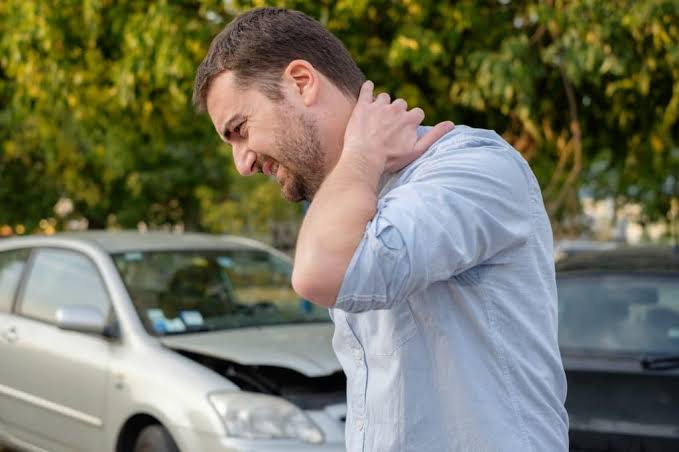
Florida’s PIP statute provides up to $10,000 in combined medical and disability benefits, subject to the applicable limitations, plus a separate $5,000 death benefit.
Within those limits, PIP can cover several different types of losses.
Medical Expenses
Florida PIP generally pays 80% of reasonable expenses for medically necessary covered treatment arising from the accident.
Covered services can include qualifying medical, surgical, X-ray, dental, and rehabilitative care, as well as medically necessary ambulance, hospital, nursing, and prosthetic services.
For example, suppose you have a $1,000 qualifying medical expense.
The basic 80% rule would equal $800 in PIP benefits. But the actual payment can still be affected by a deductible, available benefit limits, treatment eligibility, and other policy or statutory requirements.
So PIP should not be understood as insurance that simply pays every medical bill in full.
Lost Income and Disability Benefits
A car accident can also make it impossible to work.
Florida PIP generally provides disability benefits equal to 60% of qualifying lost gross income and lost earning capacity when the inability to work is caused by the covered injury.
There is an important exception.
Florida law allows a named insured to elect modified PIP coverage that excludes lost-income and earning-capacity benefits for the insured and eligible dependent resident relatives. That election results in a premium reduction.
So it would be inaccurate to assume every Florida PIP policy will always pay lost wages.
Replacement Services
PIP disability benefits can include more than income from a job.
Florida law also covers certain reasonable expenses for necessary household services that an injured person would normally have performed without pay but can no longer perform because of the accident.
Depending on the circumstances, that can help with necessary replacement services while the injured person recovers.
Death Benefits
Florida PIP also provides a $5,000 death benefit per individual when a covered accident results in death.
The statute treats this benefit separately from the medical and disability benefits.
What Is Florida’s 14-Day PIP Rule?

One of the most important Florida PIP requirements involves medical timing.
To qualify for PIP medical reimbursement, an injured person generally must receive qualifying initial services and care within 14 days after the motor vehicle accident.
The key word is initial.
This does not mean all medical treatment must be completed within 14 days. It means qualifying initial care generally needs to begin during that period.
It is also not the deadline for filing a personal injury lawsuit. The 14-day rule concerns access to PIP medical benefits.
If you are injured or experiencing symptoms, treatment decisions should be based on your medical needs rather than waiting until the end of that period.
For the practical steps to take immediately after a collision, see What to Do After a Car Accident in Florida: A Step-by-Step Guide.
Does Florida PIP Always Provide $10,000?
No.
This is one of the most common misunderstandings about Florida PIP insurance.
First, the statutory $10,000 amount is a combined medical and disability benefit limit. It is not automatically $10,000 specifically for medical bills.
Medical benefits can also be affected by whether the injured person has an emergency medical condition, commonly called an EMC.
What Is an Emergency Medical Condition?
Florida law defines an emergency medical condition as a condition involving sufficiently serious acute symptoms that the absence of immediate medical attention could reasonably be expected to place health in serious jeopardy, seriously impair bodily functions, or cause serious dysfunction of an organ or body part.
When an authorized medical professional determines that the injured person had an EMC, reimbursement for qualifying medical services can reach the higher applicable PIP limit.
When an applicable provider determines that the injured person did not have an emergency medical condition, medical reimbursement is generally limited to $2,500.
This is why receiving treatment within 14 days does not automatically mean $10,000 will be available for medical expenses.
The treatment deadline and the EMC determination are related to PIP benefits, but they address different requirements.
Who Can Florida PIP Insurance Cover?

PIP coverage is not necessarily limited to the person whose name appears first on the policy.
Under Florida’s statute, PIP can provide benefits to the named insured, qualifying relatives who live in the same household, people operating the insured vehicle, passengers in the vehicle, and certain people struck by the vehicle while they are not occupying a self-propelled vehicle.
That can include certain pedestrian and bicycle accidents.
However, determining which PIP policy pays can become more complicated.
A passenger may have their own PIP policy. Someone may qualify under a household member’s policy. Other priority and eligibility rules can also apply.
For that reason, it is better to say PIP may cover certain drivers, passengers, household members, pedestrians, and bicyclists rather than assuming one vehicle owner’s policy automatically covers everyone involved.
Are There Deductibles or Treatments PIP Does Not Cover?
Yes.
Florida insurers must offer PIP deductible options of $250, $500, and $1,000. A deductible can affect how much an insured must absorb before PIP benefits are payable under the policy.
Treatment rules matter too.
Florida law does not allow PIP medical benefits for massage therapy or acupuncture, regardless of who provides those services. The statute also contains rules governing which providers and services qualify for reimbursement.
That means receiving treatment after a car accident does not automatically mean the treatment will qualify for PIP reimbursement.
The type of care, provider, timing, medical necessity, benefit limits, and policy terms can all matter.
What Does Florida PIP Not Cover?
PIP is useful, but it is not complete car accident coverage.
It generally does not pay for:
- Repairs to your vehicle
- Damage to someone else’s property
- 100% of every qualifying medical bill
- 100% of lost wages
- Unlimited medical treatment
- Automatic pain-and-suffering damages
- Every treatment provided after an accident
PIP is one part of an auto insurance policy, not a replacement for every other type of coverage.
That is also why describing a policy simply as “full coverage” can be misleading. What matters is which individual coverages and limits are actually included in the policy.
What Happens If PIP Does Not Cover All of Your Losses?

A serious car accident can produce expenses that quickly exceed PIP benefits.
Medical bills may continue after available PIP benefits are exhausted. An injured person may lose more income than PIP pays. PIP also does not serve the same purpose as liability or uninsured/underinsured motorist insurance.
Depending on who caused the crash, the injuries involved, and the policies available, other insurance coverage or legal claims may need to be considered.
That is where the broader rules discussed in our Florida Car Accident Laws guide become important.
What If Your PIP Benefits Are Reduced or Denied?
PIP claims can be disputed for different reasons.
The issue may involve treatment timing, medical necessity, provider eligibility, billing, available benefits, deductibles, exclusions, or whether the person qualifies for coverage under a particular policy.
Florida law also contains detailed requirements governing how PIP claims are submitted, reviewed, and paid.
If benefits are reduced or denied, the reason matters.
Understanding exactly why the insurer took that position is the first step in determining whether additional information, insurance review, or legal help may be appropriate.
How Can Cohen Injury Law Help With a Florida PIP or Car Accident Claim?
At Cohen Injury Law, we help people injured in Florida car accidents understand PIP benefits, insurance disputes, and other coverage that may apply when losses exceed PIP.
Our founding attorney, Zach Cohen, began his career representing insurance companies in personal injury cases, giving us insight into how insurers evaluate claims.
We also handle truck and motorcycle crashes, slip and falls, negligent security, and other injury matters across South Florida. Call 954-246-3999 for a free consultation from our Fort Lauderdale office.
Final Thoughts
Florida PIP insurance can help with qualifying medical expenses, lost income, replacement services, and death benefits after a covered car accident.
But the coverage has important limits.
PIP generally pays only a percentage of medical expenses and wages. Initial medical care must meet the 14-day requirement, and the EMC rules can significantly affect available medical benefits.
PIP also does not cover every financial consequence of a crash.
When injuries are serious, benefits are disputed, or losses exceed available PIP coverage, the entire insurance picture may need to be reviewed.