
 View All
Burn Injury Claims in Florida: Who May Be Held Responsible?

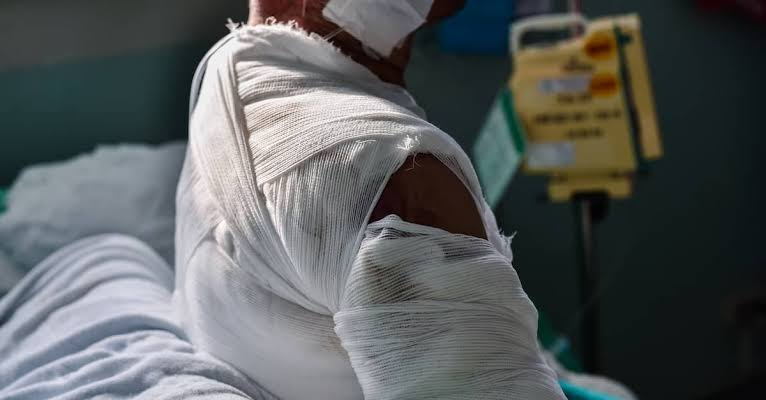
A serious burn can result from an apartment fire, defective appliance, vehicle crash, electrical failure, chemical exposure, workplace accident, or explosion.
But knowing what caused the physical injury is only the beginning.
The next question is:
Who had legal responsibility for the danger that caused the burn?
Depending on the circumstances, a Florida burn injury claim may involve a property owner, manufacturer, negligent driver, contractor, maintenance company, workplace third party, or several parties.
The severity of the burn alone does not establish liability. The evidence must connect a legally responsible person or business to the condition, product, or conduct that caused or worsened the injury.
What Is a Burn Injury Claim in Florida?
A “burn injury claim” is not one specific type of lawsuit.
The legal theory depends on how the burn occurred.
For example, a claim could involve:
- Negligence
- Premises liability
- Products liability
- A motor vehicle accident
- Workers’ compensation
- A separate third-party workplace claim
That distinction matters because each type of case asks different questions.
A property case may focus on who controlled a dangerous condition and what that party knew or should have known. A product case may focus on whether a product was defective. A workplace burn may begin with workers’ compensation rather than an ordinary negligence claim against the employer.
The starting point is therefore not simply “How serious is the burn?”
It is “What caused it, and who was legally responsible for that source of danger?”
Does a Burn Automatically Mean Someone Was Negligent?
No.
A fire, explosion, electrical incident, or other burn-producing event does not by itself prove negligence.
A useful example comes from the 2026 Florida case Diversified Land Management v. Agosto. A renter suffered serious burns while attempting to extinguish a cooking-oil fire and argued that his landlord’s failure to provide smoke detectors caused his injuries.
The Sixth District Court of Appeal concluded that the evidence did not adequately establish that the missing smoke detector caused the burn injuries because the proof did not show that the renter, who had been outside, would have heard the alarm in time.
That illustrates an important distinction:
A safety problem may show what was wrong. Causation asks whether that particular problem actually caused or worsened the injury.
Both can matter in a Florida burn injury claim.
Who May Be Held Responsible for a Florida Burn Injury?
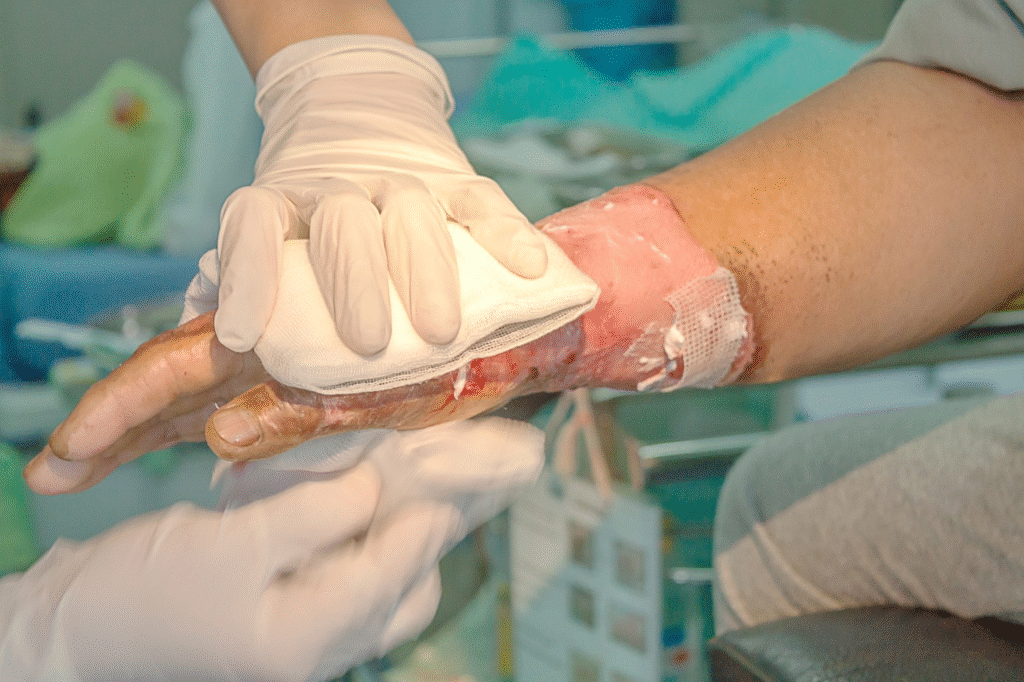
The answer depends heavily on the source of the burn and who controlled it.
Property Owners or Managers
A property owner, landlord, business operator, or manager may potentially be responsible when a burn arises from a dangerous property condition.
Examples might involve:
- Unsafe electrical systems
- Poorly maintained equipment
- Heating-system problems
- Known fire hazards
- Other dangerous conditions on the property
But a fire occurring on someone’s property does not automatically make the owner liable.
The analysis may involve who controlled the condition, what duty applied, whether the defendant knew or should have known of the danger where notice is relevant, whether reasonable care was lacking, and whether that failure actually caused the injury.
Negligent Drivers
Motor vehicle collisions can lead to burns through fuel ignition, electrical damage, vehicle fires, or contact with hot components.
If another driver negligently causes the crash, that driver may potentially be responsible for the resulting injuries.
In some cases, however, the crash and the fire may involve different liability questions. A driver might cause the collision while an allegedly defective vehicle component is claimed to have made the resulting injuries worse.
Florida’s comparative-fault statute specifically recognizes product claims involving enhanced injuries caused by an allegedly defective product.
Contractors and Maintenance Companies
Burn accidents can also involve electrical contractors, HVAC companies, gas contractors, equipment installers, repair companies, or maintenance providers.
A contractor may potentially be responsible when its work creates a dangerous condition or when negligent repair or maintenance contributes to a fire, electrical event, or explosion.
But workplace cases require extra caution. Florida workers’ compensation immunity can sometimes affect whether another contractor or company may actually be sued.
What If a Defective Product Caused the Fire or Burn?

Product-related burn claims require a different analysis from ordinary negligence.
Potential products include:
- Batteries and chargers
- Appliances
- Space heaters
- Vehicles or vehicle components
- Power tools
- Industrial machinery
- Electrical equipment
Florida law recognizes products liability claims under theories that can include strict liability, negligence, and breach of warranty. Its current comparative-fault statute defines products liability broadly and also covers claims alleging that a defective product increased the severity of injuries from another accident.
But a product catching fire does not automatically prove that it was defective.
Florida’s 2026 Ford Motor Co. v. Hetsler decision discussed the Cassisi inference, which can permit a defect issue to reach a jury in certain cases where evidence shows that a product malfunctioned during normal operation. The court also emphasized that factors such as the product’s age, repairs, use, and condition can matter.
For that reason, preserving the product can be especially important. A battery, appliance, machine, vehicle component, charger, or other item involved in the incident may contain evidence needed to determine how the failure occurred.
What If the Burn Injury Happened at Work?
A qualifying employee who suffers a burn in the course of employment may be entitled to Florida workers’ compensation benefits.
Cohen Injury Law’s workers’ compensation practice specifically identifies burn injuries and hazardous chemical exposure among the workplace injuries it handles.
Workers’ compensation generally provides the main route for a covered employee to pursue benefits from the employer for an ordinary workplace injury because Florida law generally gives covered employers immunity from ordinary negligence suits.
But another claim may exist if someone outside the protected employment relationship caused the burn.
Florida §440.39 expressly allows a qualifying injured worker to receive workers’ compensation while also pursuing a legally responsible third party.
Examples could include an outside driver, equipment company, property owner, maintenance provider, or another legally responsible business.
For more detail, see How Does Workers’ Compensation Work in Florida? and Can You Sue Someone Other Than Your Employer After a Workplace Accident in Florida?
Can More Than One Party Be Responsible for the Same Burn Accident?
Yes.
A burn accident may result from several failures.
For example, equipment might be defective, a contractor might install it incorrectly, a maintenance company might ignore warning signs, and a property manager might fail to address a known problem.
Florida’s comparative-fault law generally allocates damages according to each responsible party’s percentage of fault in covered negligence actions. The same statute generally prevents recovery when a claimant is found more than 50% at fault for their own harm, subject to statutory exceptions.
So identifying one potential defendant should not necessarily end the investigation.
The question is whether other conduct or product failures also contributed to the burn.
What Evidence Can Help Show Who Caused the Burn?

Burn cases often require a detailed investigation because the incident itself may damage or destroy important evidence.
Useful evidence may include:
- Fire department or incident reports
- Scene photographs and video
- Surveillance footage
- Witness statements
- Electrical, gas, or fuel records
- The product or equipment involved
- Model and serial numbers
- Repair and maintenance history
- Inspection records
- Prior complaints
- Product instructions or warnings
- Service and construction contracts
- Medical records
- Photographs documenting scarring
Contracts can help show which company was responsible for installing, maintaining, inspecting, or repairing equipment.
The physical product can be equally important in a product case.
Whenever possible, potentially relevant equipment should be preserved rather than discarded, repaired, or altered before its role in the incident can be properly evaluated.
What Compensation May Be Available in a Burn Injury Claim?
Depending on the type of claim and available evidence, compensation may potentially include:
- Past and future medical expenses
- Lost income
- Reduced earning capacity
- Pain and suffering
- Permanent scarring or disfigurement
- Other economic and noneconomic losses
Florida’s comparative-fault statute expressly recognizes both economic and noneconomic damages in covered negligence actions.
The damages available in a workers’ compensation claim are different because workers’ comp provides defined statutory benefits rather than the same damages available in an ordinary personal injury case.
How Long Do You Have to Bring a Florida Burn Injury Claim?
There is not one filing deadline that applies to every Florida burn case.
For ordinary negligence actions, Florida currently provides a general two-year limitations period.
But certain personal injury claims founded on the design, manufacture, distribution, or sale of personal property have a four-year limitations period under §95.11.
Claims involving the design, planning, or construction of an improvement to real property also have separate four-year limitation and seven-year repose provisions under current Florida law.
The correct deadline therefore depends on the legal theory, defendant, and circumstances. A burn victim should not assume that a general deadline found online necessarily applies to their particular claim.
How Can Cohen Injury Law Help After a Serious Burn Injury?
At Cohen Injury Law, we can investigate how a serious burn occurred, preserve relevant evidence, examine property or equipment records, identify potentially responsible businesses, review available insurance, and evaluate whether a workplace injury also creates workers’ compensation or third-party issues.
Our founding attorney, Zach Cohen, began his career representing insurance companies in personal injury cases, giving him insight into how insurers evaluate and defend claims.
We represent injured clients across South Florida from our Fort Lauderdale office and offer free consultations. Call 954-246-3999 to discuss your legal options.
Frequently Asked Questions
Can a Property Owner Be Responsible for a Fire or Burn Injury?
Potentially, but ownership alone is not enough. Liability may depend on control of the dangerous condition, the applicable duty, notice where relevant, whether reasonable care was lacking, and whether that failure caused the burn.
Can I Sue If a Defective Product Caused My Burn?
Potentially. Florida recognizes several product-liability theories, but a fire or malfunction alone does not automatically establish liability. Evidence must support an actionable defect or other product-related wrongdoing and connect it to the injury.
Can I File a Burn Injury Claim If I Was Hurt at Work?
A qualifying workplace burn may support workers’ compensation benefits. A separate claim may also exist when another legally responsible party outside applicable workers’ comp immunity caused or contributed to the injury.
Can More Than One Company Be Responsible for the Same Burn Accident?
Yes. Depending on the evidence, responsibility may involve a property owner, manufacturer, contractor, maintenance provider, driver, or another party. Florida law can allocate fault among multiple responsible parties in covered cases.
Final Thoughts
A severe burn does not, by itself, identify the person or company legally responsible for it.
A stronger investigation starts with four questions:
What physically caused the burn?
Who controlled, created, manufactured, installed, repaired, or maintained that source of danger?
What legal theory applies to that person or business?
Can the evidence show that the conduct or defect actually caused or worsened the injury?
Answering those questions can reveal whether the case involves one responsible party, several defendants, workers’ compensation, a product claim, or a combination of different legal issues.