

 View All
How Does Comparative Negligence Work in a Florida Car Accident Claim?

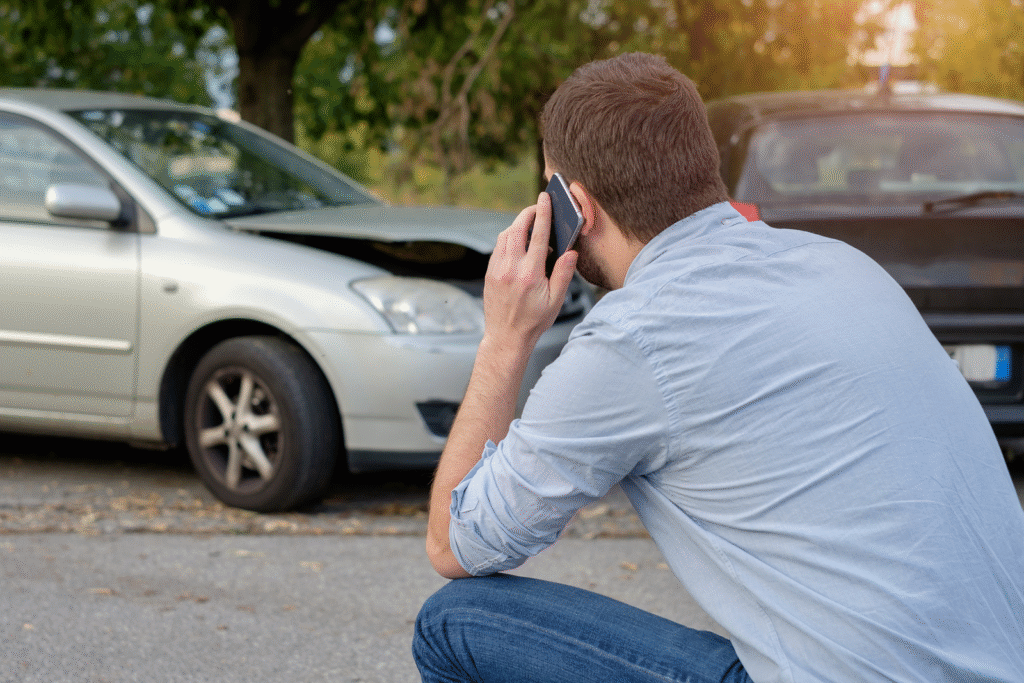
The other driver says you caused part of the crash. Their insurance company agrees.
Does that mean your car accident claim is over?
Not necessarily.
Florida recognizes that more than one person can contribute to the same accident. Under the state’s current comparative-fault law, your share of responsibility can reduce the damages you recover. But the percentage matters.
If you are found greater than 50% responsible for your own harm, current Florida law can prevent you from recovering damages in a negligence action covered by the rule. At 50% or below, recovery may still be possible, although it can be reduced according to your share of fault.
What Is Comparative Negligence in a Florida Car Accident?
Comparative negligence is the idea that responsibility for an accident does not always belong entirely to one person.
Florida’s statute uses the term comparative fault, but “comparative negligence” is commonly used when discussing shared responsibility in negligence cases.
Imagine that one driver changes lanes without enough room, but the other driver was also traveling too fast. Both actions may have contributed to the collision.
Instead of treating the accident as completely one driver’s fault or the other’s, the law can assign percentages of responsibility.
Those percentages can directly affect how much an injured person may recover.
How Does Florida’s Modified Comparative Negligence Rule Work?
Florida did not always use its current system.
The state previously followed a pure comparative-fault approach, which generally allowed a claimant to recover a reduced amount even when that person carried most of the responsibility.
Florida changed that rule in 2023 by adding the greater-than-50% limitation to §768.81. The current statute still uses that modified system in 2026.
Under today’s rule:
- If you are partly responsible, your damages can be reduced proportionally.
- If you are exactly 50% responsible, you have not crossed the statutory bar.
- If you are greater than 50% responsible, recovery is barred under the applicable comparative-fault rule.
What Is Florida’s “51% Rule”?
You may hear lawyers or insurance professionals refer to this as Florida’s 51% rule.
That phrase is useful shorthand, but the statute is more precise. It says greater than 50%, not specifically 51%.
That difference is worth remembering.
At 50%, a claimant may still potentially recover a reduced amount.
Once the assigned percentage goes above 50%, the statute’s bar can apply.
How Does Comparative Fault Reduce Compensation?

A simple example makes the rule easier to understand.
Suppose an injured driver has $100,000 in recoverable damages.
If the driver is found 20% responsible for the accident, an illustrative application of comparative fault would reduce the amount by 20%, leaving $80,000.
At 50% fault, the illustrative amount would fall to $50,000.
But if the claimant is found more than 50% responsible for their own harm, the current statutory rule can prevent recovery altogether.
The statute applies the proportional reduction to both economic and noneconomic damages.
These numbers are only examples. Real cases depend on the damages that can actually be proven and the percentage of fault ultimately assigned.
Who Decides How Much Fault Each Driver Has?
There is no automatic chart that says a rear-end driver is always a certain percentage responsible or that one type of traffic violation automatically produces a specific number.
Fault depends on what happened and what the available evidence shows.
During an insurance claim, the drivers and insurance companies may take different positions about responsibility. An adjuster might argue that an injured driver contributed to the collision, but that initial position is not automatically the final legal determination.
If a disputed negligence case proceeds through litigation, the evidence can be used to determine the responsibility of the parties, and judgment is entered according to the percentages of fault assigned under Florida law.
In a multi-vehicle collision, responsibility may also be divided among more than two people.
What Evidence Can Affect Comparative Fault in a Car Accident?
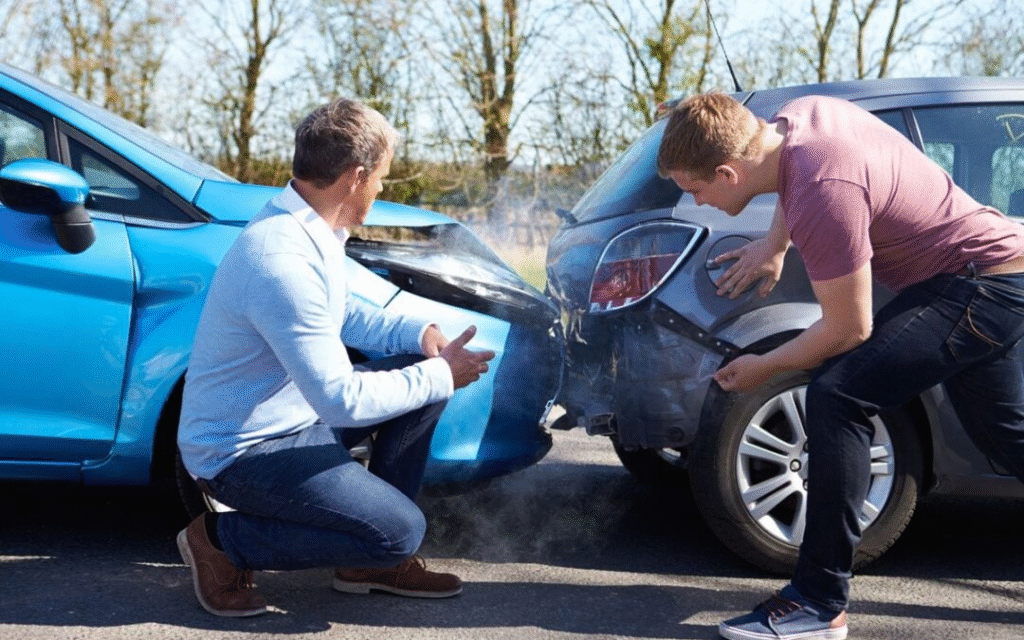
Because fault percentages depend on the facts, evidence can become particularly important when both drivers blame each other.
Relevant evidence may include:
- Photographs of the scene and vehicle damage
- Witness statements
- Dashcam footage
- Nearby surveillance video
- Traffic signals and road markings
- Crash-investigation information
- Vehicle Event Data Recorder information
- Other electronic evidence
- Accident reconstruction in more complex cases
Vehicle EDR data can sometimes provide information about matters such as speed, braking and other vehicle activity before a collision. Cohen Injury Law has discussed how this type of electronic evidence can become important when liability is disputed.
No single driver’s accusation establishes a final percentage by itself.
The surrounding evidence matters.
What If the Insurance Company Says You Were Partly at Fault?
An insurer may argue that you contributed to the accident.
That position matters because even a relatively small percentage can reduce a potential recovery, while a percentage greater than 50% can trigger the statutory bar.
But an insurer’s initial assessment should be considered alongside the actual evidence.
For example, photographs, witnesses, video, vehicle data, and the physical circumstances of the crash may support—or contradict—the way an insurer describes what happened.
If liability is seriously disputed, understanding the evidence behind the fault allegation can be more important than simply accepting the first percentage assigned.
How Can Cohen Injury Law Help With a Disputed-Fault Car Accident Claim?
At Cohen Injury Law, we help injured drivers evaluate disputed liability, insurance issues, and the evidence surrounding a Florida car accident.
Our founding attorney, Zach Cohen, began his career representing insurance companies in personal injury cases, giving our firm insight into how insurers evaluate claims.
We also handle truck and motorcycle crashes, slip and falls, negligent security, and other injury matters across South Florida. We offer free consultations from our Fort Lauderdale office. Call 954-246-3999 to discuss your case.
Frequently Asked Questions About
Can I Recover Compensation If I Was Partly at Fault?
Possibly. Florida law can reduce your damages according to your percentage of responsibility. Being partly at fault does not automatically end a claim unless your assigned fault rises above the statutory greater-than-50% threshold.
What Happens If I Am Exactly 50% at Fault?
At exactly 50% fault, you have not crossed Florida’s greater-than-50% statutory bar. Your recoverable damages may still be reduced according to the percentage of fault assigned to you.
What Happens If I Am More Than 50% at Fault?
Under Florida’s current comparative-fault statute, a claimant found greater than 50% responsible for their own harm generally cannot recover damages in a negligence action to which the rule applies.
Can an Insurance Company Decide My Final Percentage of Fault?
An insurer can take a position on responsibility while evaluating a claim, but that does not automatically establish the final legal percentage. Fault can be disputed using evidence and, in litigation, determined through the legal process.
Final Thoughts
Sharing some responsibility for a Florida car accident does not automatically eliminate a claim.
What matters is how much fault is assigned and what evidence supports that percentage.
At 50% or below, damages may still be recoverable, subject to a proportional reduction. Once the claimant’s responsibility rises above 50%, Florida’s current comparative-fault rule can bar recovery.
When drivers disagree about what happened, photographs, witnesses, video, vehicle data, and other evidence can become especially important in determining how responsibility should actually be divided.