
 View All
Florida Car Accident Laws: What Injured Drivers Need to Know

You may know exactly who caused a car accident and still be confused when your own insurance company becomes involved first.
That is one of the unusual things about Florida car accident law.
Florida uses a no-fault insurance system, but fault still matters. Drivers have Personal Injury Protection coverage, but PIP does not necessarily cover every loss. You may also hear terms such as comparative fault, serious injury threshold, bodily injury coverage, and UM/UIM insurance while you are still trying to recover.
Each rule affects a different part of the claim.
Understanding how they fit together can help you make sense of who may pay, which damages may be available, and which deadlines matter after a Florida car accident.
What Laws Apply After a Car Accident in Florida?
There is no single Florida law that controls everything that happens after a crash.
Instead, several laws work together.
Florida’s no-fault rules determine how certain initial injury benefits are handled. PIP law affects medical and disability benefits. Comparative-fault rules can reduce—or sometimes prevent—a negligence recovery when an injured person shares responsibility for the crash.
Other laws address insurance requirements, pain-and-suffering damages, accident reporting, and how long an injured person generally has to file a negligence lawsuit.
That is why knowing that Florida is a “no-fault state” tells only part of the story.
The important question is how each rule affects your particular losses and available insurance coverage.
Is Florida Still a No-Fault State in 2026?
Yes.
Florida still operates under its Motor Vehicle No-Fault Law in 2026. Proposals introduced during the 2026 legislative session to change the system did not become law; the relevant House and Senate bills died in committee on March 13, 2026.
But the phrase “no-fault” is easy to misunderstand.
It does not mean no one caused the accident.
It means certain insurance benefits—primarily Personal Injury Protection benefits—can be available without first proving which driver caused the collision.
Fault can still become extremely important when an injured person seeks damages beyond available no-fault benefits, when insurers disagree about responsibility, or when several drivers contributed to the crash.
Think of no-fault as one part of Florida’s insurance system, not a rule that makes responsibility disappear.
How Does Florida PIP Insurance Work After a Car Accident?
Personal Injury Protection, usually called PIP, is at the center of Florida’s no-fault system.
For covered individuals, Florida law provides up to $10,000 in combined medical and disability benefits, subject to statutory requirements. The statute also provides a separate $5,000 death benefit.
But saying “Florida PIP gives everyone $10,000” is misleading.
How much is actually available depends on the type of benefit, medical findings, covered expenses, and other requirements.
What Does PIP Pay For?
Florida PIP generally pays 80% of qualifying medically necessary expenses rather than 100% of every medical bill.
It can also provide disability benefits equal to 60% of qualifying lost gross income and lost earning capacity caused by the injury, subject to the overall limits and other statutory rules.
For example, having a $4,000 qualifying medical bill does not automatically mean PIP simply pays the full $4,000.
The benefit percentages, policy terms, deductible if applicable, available limits, and medical requirements all matter.
PIP is therefore better understood as a source of initial benefits—not a promise that every financial consequence of a serious car accident will be covered.
What Is Florida’s 14-Day PIP Rule?
Timing is important.
Florida law generally requires qualifying initial medical services and care within 14 days after the motor vehicle accident for PIP medical benefits.
This rule is commonly misunderstood.
The 14-day period is not the deadline for filing a car accident lawsuit.
It concerns eligibility for PIP medical benefits.
Those are completely different issues.
An injured person should also not interpret the rule as a reason to wait until day 13 or 14 when medical care is needed earlier. Treatment decisions should be based on the person’s medical condition, not on trying to use the entire legal window.
Why Can PIP Medical Benefits Be Limited to $2,500?
Another common misunderstanding involves the $10,000 PIP figure.
Under current Florida law, qualifying medical reimbursement may reach up to $10,000 when an authorized medical professional determines that the injured person had an emergency medical condition, or EMC.
When the applicable provider determines that the injured person did not have an emergency medical condition, reimbursement for qualifying medical services is generally limited to $2,500.
That distinction is why the statement “Florida gives every accident victim $10,000 in PIP medical coverage” does not tell the full story.
The medical findings matter.
When Can an Injured Driver Seek Pain and Suffering Damages?

Medical expenses and lost wages are not the only losses that can follow a serious car accident.
A person may also experience chronic pain, permanent limitations, emotional distress, scarring, or major changes in day-to-day life.
Florida law places a threshold on recovering certain noneconomic damages, including pain, suffering, mental anguish, and inconvenience, in motor vehicle cases.
What Is Florida’s Serious Injury Threshold?
Florida Statute §627.737 identifies four qualifying categories:
- Significant and permanent loss of an important bodily function
- Permanent injury within a reasonable degree of medical probability, other than scarring or disfigurement
- Significant and permanent scarring or disfigurement
- Death
The wording matters.
It would be too broad to say that a person cannot make any claim against another driver unless this threshold is met.
The statute specifically addresses recovery of noneconomic damages such as pain, suffering, mental anguish, and inconvenience.
That distinction becomes especially important when injuries are serious or permanent and losses go beyond the benefits available through PIP.
What Happens If You Were Partly at Fault for the Crash?

A car accident does not always have one driver who is 100% responsible.
Maybe one driver changed lanes without enough room while the other driver was speeding. Perhaps one person failed to yield while another was distracted.
Florida law can divide responsibility between the people involved.
Florida currently uses modified comparative fault for negligence actions covered by the statute. If an injured person’s own negligence contributed to the harm, damages can be reduced according to that person’s percentage of fault.
For example, suppose recoverable damages were determined to be $100,000 and the injured person was found 20% responsible.
A 20% allocation of fault could reduce the recoverable damages accordingly.
How Does Florida’s Greater-Than-50% Rule Work?
Florida also has an important cutoff.
Under §768.81, a person found greater than 50% at fault for their own harm may not recover damages in a negligence action to which the rule applies.
Notice the wording:
Greater than 50%.
Being exactly 50% at fault does not cross that statutory threshold.
This is one reason disputed accident evidence can matter. Vehicle damage, witnesses, video footage, and in some cases Event Data Recorder information may help clarify how a collision occurred when drivers give different versions of events.
What Auto Insurance Does Florida Require?
Florida’s insurance requirements are another source of confusion, especially because drivers often use broad phrases such as “minimum insurance” or “full coverage.”
For a typical qualifying four-wheel motor vehicle, Florida’s basic requirements include:
- $10,000 in Personal Injury Protection
- $10,000 in Property Damage Liability
The Florida Bar identifies those as the basic required coverages for owners of qualifying vehicles.
Those two coverages do very different jobs.
PIP deals primarily with qualifying injury-related benefits for covered individuals.
Property Damage Liability, or PDL, addresses damage the insured causes to someone else’s property.
Is Bodily Injury Liability Insurance Always Required?
Bodily Injury Liability coverage is different.
It pays qualifying claims when an insured is legally responsible for bodily injury to another person, subject to the policy.
Florida does not simply make bodily injury liability part of the same basic PIP-and-PDL registration requirement for every ordinary private driver. Separate financial-responsibility laws can impose bodily injury requirements in particular circumstances.
That distinction matters after a serious accident.
A person can cause a collision resulting in substantial injuries without necessarily having a large bodily injury liability policy available to pay the resulting claim.
This is one reason identifying the actual insurance coverage is so important.
What Does “Full Coverage” Really Mean?
“Full coverage” sounds reassuring, but it is not a precise description of what an auto policy contains.
Two drivers can both say they have full coverage while having very different liability limits, deductibles, collision coverage, UM/UIM coverage, and other protections.
The policy itself—not the phrase used to describe it—determines what insurance is actually available.
What If the At-Fault Driver Has No Insurance or Not Enough Insurance?
Being able to prove another driver caused the crash is only part of the problem.
The next question is whether enough insurance exists to cover the resulting losses.
This is where uninsured and underinsured motorist coverage, commonly called UM/UIM, may become important.
Florida law generally requires UM coverage to be offered when a qualifying motor vehicle liability policy provides bodily injury liability coverage, although the named insured may reject UM coverage in writing or select permitted lower limits.
Depending on the policy and facts, UM/UIM coverage can help when the responsible motorist has no applicable bodily injury coverage or has limits that are too low compared with the damages.
That is why reviewing the injured person’s own insurance policy can be just as important as investigating the at-fault driver’s coverage.
What Compensation May Be Available After a Florida Car Accident?
There is no standard Florida car accident settlement.
Compensation depends on the injuries, available insurance, fault, medical evidence, lost income, and other facts surrounding the crash.
It helps to separate damages into two broad groups.
Economic Losses
Economic damages involve measurable financial losses.
Depending on the case, they may include:
- Medical expenses
- Future medical costs
- Lost wages
- Reduced earning capacity
- Other documented financial losses caused by the accident
PIP may pay some qualifying medical and disability benefits, but serious injuries can create losses that exceed the benefits available under PIP.
Other insurance and liability claims may then become important.
Noneconomic Losses
Noneconomic damages address losses that do not come with a simple invoice.
They can include pain, suffering, mental anguish, inconvenience, and other effects of a serious injury.
As explained above, Florida’s serious-injury threshold is particularly important when seeking these types of damages after a motor vehicle accident.
The amount potentially recoverable can also be affected by comparative fault and the available insurance coverage.
That is why the value of a claim cannot be determined accurately from the type of accident alone.
When Must a Florida Car Accident Be Reported?
Florida’s reporting law changed, which makes older online advice especially risky.
Under the current 2026 version of Florida Statute §316.065, a driver must immediately notify the appropriate law-enforcement agency when a crash results in:
- Injury
- Death
- Apparent damage to a vehicle or other property of at least $2,000
Some older articles still refer to a $500 property-damage threshold. That is not the amount stated in the current 2026 statute.
Of course, a driver standing beside a damaged car may have no realistic way to know whether repairs will cost $1,500, $2,500, or much more.
How Long Do You Have to File a Florida Car Accident Lawsuit?
Another deadline commonly confused with the PIP 14-day rule is Florida’s statute of limitations.
For a negligence action, current Florida Statute §95.11 generally provides a two-year limitations period.
Again, that is not the same as the 14-day PIP medical-treatment requirement.
One concerns certain insurance benefits. The other concerns the time for beginning a negligence lawsuit.
It is also better to say Florida generally provides two years rather than telling every injured person that every possible accident-related claim has exactly the same deadline.
Different causes of action, defendants, or circumstances can involve separate procedural requirements.
For example, a collision involving a government vehicle can raise additional rules that would not necessarily apply to an ordinary crash involving two private drivers.
And even when a legal deadline seems far away, waiting can create practical problems.
Witnesses become harder to find. Video may disappear. Vehicles are repaired. Memories fade.
A statute of limitations tells you the outer legal deadline in an ordinary negligence action. It does not tell you that waiting until the last moment is a good idea.
When Should an Injured Driver Consider Speaking With a Florida Car Accident Lawyer?
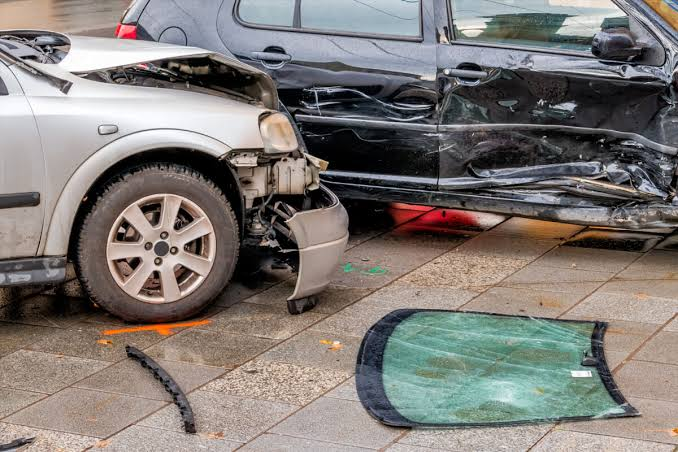
Not every fender bender requires legal representation.
But getting legal advice may become more useful when the legal or insurance issues are no longer simple.
Examples include:
- Serious or permanent injuries
- Disputed responsibility for the crash
- Allegations that you share significant fault
- A denied or disputed PIP claim
- Unclear bodily injury insurance limits
- Possible UM/UIM coverage
- Multiple vehicles or responsible parties
- Commercial or government vehicles
- Significant medical bills or lost income
- An insurer disputing the value of the claim
- Questions about filing deadlines
A lawyer can review how the different pieces fit together rather than looking at one rule in isolation.
Why Choose Cohen Injury Law for a Florida Car Accident Claim?
At Cohen Injury Law, we help people injured in Florida car accidents understand liability, insurance coverage, and the options available after a serious crash.
Our founding attorney, Zach Cohen, began his career representing insurance companies in personal injury cases, giving our firm insight into how insurers evaluate claims. We also handle truck and motorcycle crashes, slip and falls, negligent security, daycare injuries, and workers’ compensation matters.
We serve clients across South Florida from Fort Lauderdale, offer free consultations, and charge no fee or cost unless we win. Call 954-246-3999.
Frequently Asked Questions
Is Florida Still a No-Fault State in 2026?
Yes. Florida still uses its no-fault/PIP system in 2026. PIP can provide certain medical and disability benefits regardless of who caused the crash, although fault still matters for liability and other potential damages.
Can You Recover Damages If You Were 50% at Fault in Florida?
Potentially. Florida’s current comparative-fault statute bars recovery when a person is greater than 50% responsible for their own harm. At exactly 50%, that particular statutory bar has not been crossed.
Does Florida PIP Always Pay $10,000?
No. PIP has a $10,000 combined medical/disability limit, but medical reimbursement may be limited to $2,500 when an applicable provider determines that the injured person did not have an emergency medical condition.
How Long Do You Have to Sue After a Florida Car Accident?
Florida generally provides two years to file a negligence action. Different claims or circumstances can involve other requirements, so the applicable deadline should be evaluated based on the specific accident rather than assumed.
Final Thoughts
Florida car accident laws become easier to understand when you separate the different parts of a claim.
PIP can provide certain initial benefits regardless of fault. Fault can still affect liability and compensation. The seriousness of an injury matters when pursuing noneconomic damages, and the amount of insurance available can determine which sources of recovery need to be considered.
Deadlines matter too—but Florida’s 14-day PIP rule and its general two-year negligence statute of limitations serve very different purposes.
If a crash involves serious injuries, disputed fault, inadequate insurance, or questions about available benefits, understanding how these rules work together can be just as important as understanding any one law by itself.